


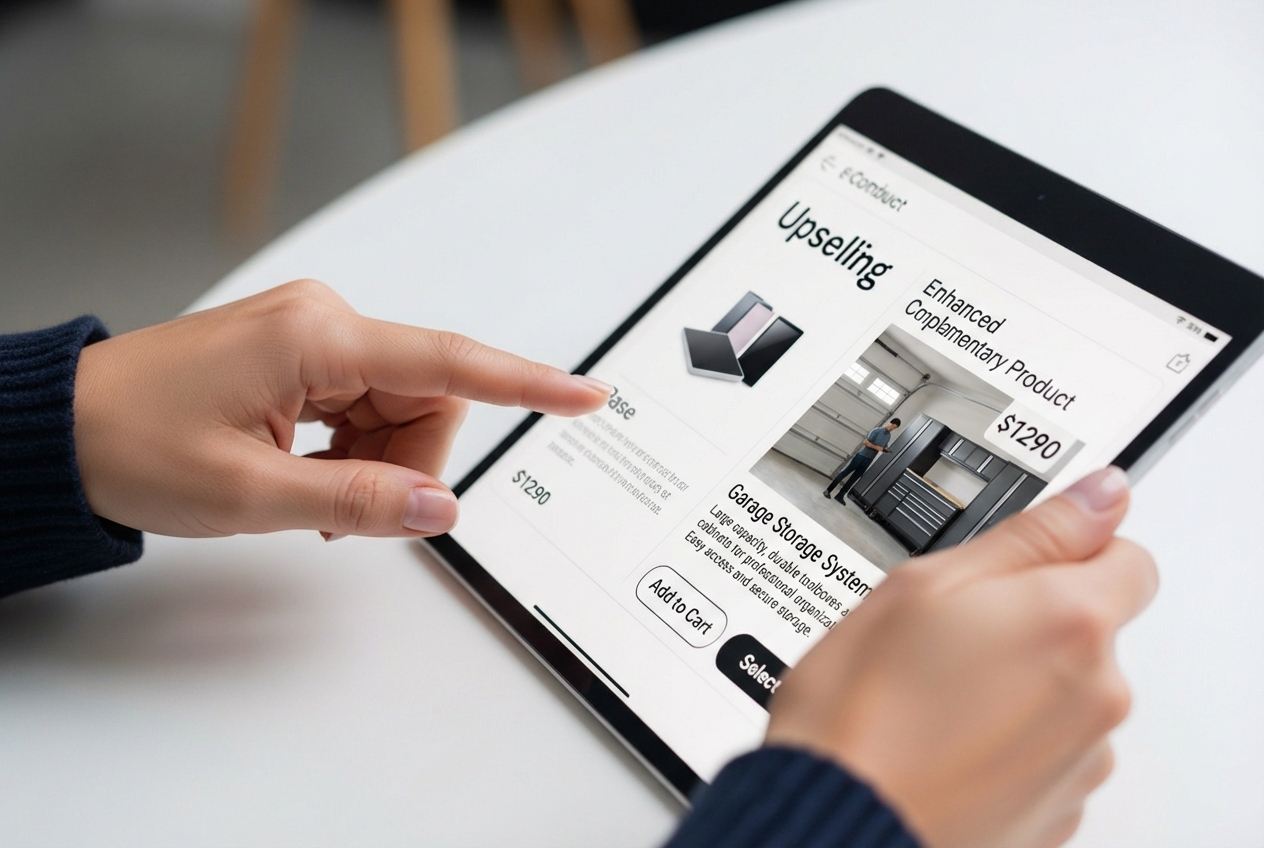

Why Upselling on Shopify Drives Sustainable Revenue Growth
Summary
- Upselling encourages customers to buy a premium version of a product, while cross-selling suggests complementary items.
- The probability of selling to an existing customer is 60-70%, compared to 5-20% for a new one.
- Effective upselling can increase Average Order Value (AOV) by 10-30%.
- Key strategies include pre-purchase offers, post-purchase one-click upsells, product bundles, and subscription models.
Upselling Shopify tactics involve suggesting a higher-value version of a product a customer is already considering, like a laptop with more storage. Cross-selling is different; it involves recommending related products to complement a purchase, such as a laptop case. These offers can be presented before purchase on product or cart pages, or after purchase on the thank you page.
This matters because it is far more likely you will sell to an existing customer than a new one. First-time buyers have only a 27% chance of returning, but after a second or third purchase, that likelihood jumps to 54%. A successful upsell can be the trigger for that second purchase, starting a longer-term customer relationship.
When done correctly, upselling helps customers find exactly what they need. A customer buying a DSLR camera benefits from a memory card and protective case. Someone purchasing a premium mattress might appreciate an extended warranty. The key is relevance and timing.
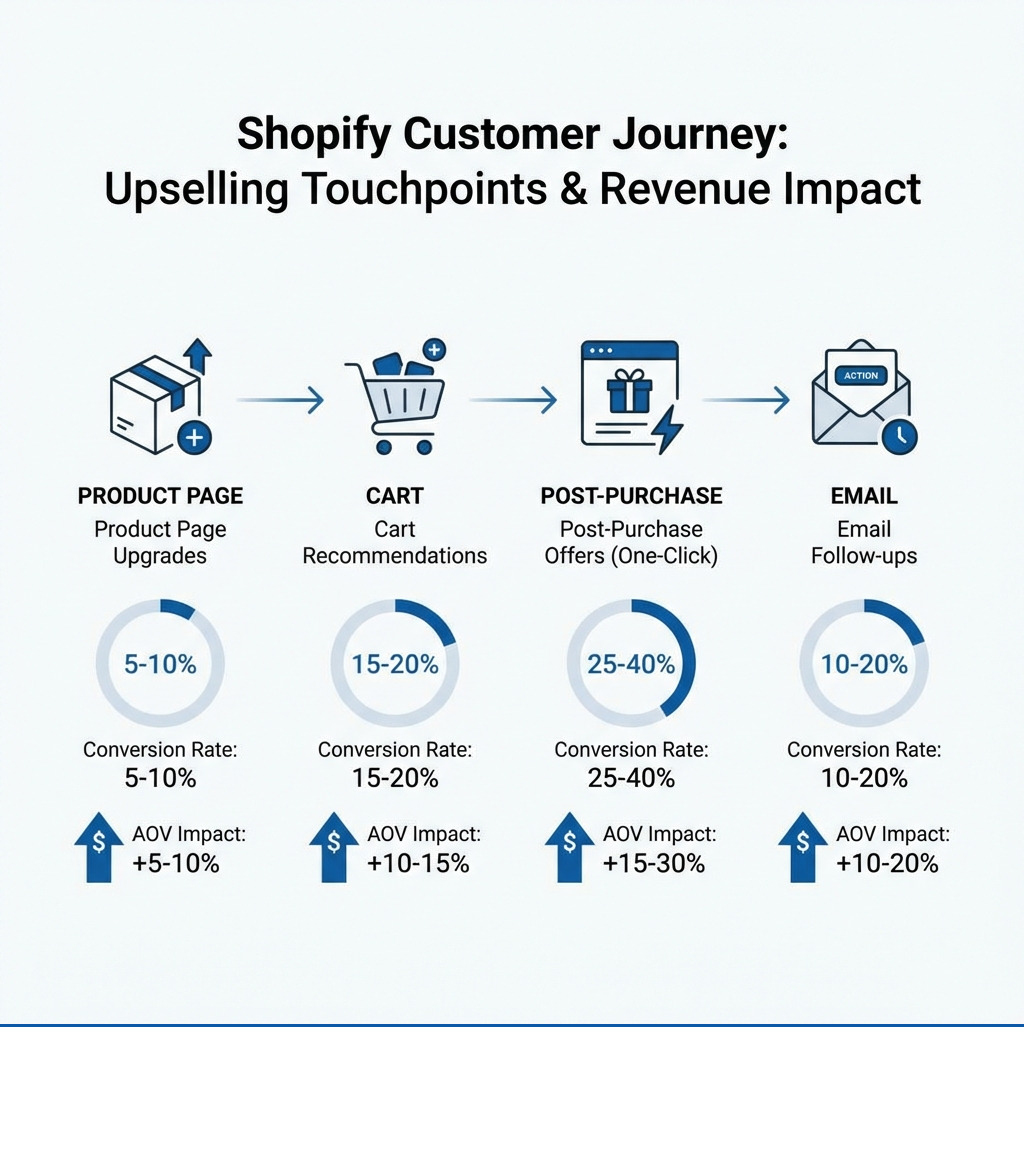
The mechanics of effective upselling Shopify plans involve multiple touchpoints. You can present upgrades on product pages, suggest bundles at checkout, or offer one-click add-ons immediately after purchase. Each approach serves a different purpose. Post-purchase upsells, for example, convert well because they require no re-entry of payment information and carry zero risk to your primary conversion.
I'm Steve Pogson, and over the past two decades, I've helped businesses implement proven upselling Shopify plans that increase AOV and give customers a better result from their purchase. At First Pier, we've found that the most successful stores treat upselling not as an afterthought, but as a core part of their revenue plan.
Important upselling Shopify terms:
What is Upselling and Why Does It Matter?
Upselling is a sales approach where you encourage a customer to buy a more expensive, upgraded, or premium version of a product they are already considering. The aim is to increase the order value by offering something with greater usefulness or better performance. For example, if a customer is looking at a 13-inch laptop, an upsell might be to suggest the 15-inch model with a faster processor. Done well, this is about helping the customer choose a product that better fits their needs, not just pushing extra items.
For Shopify stores, upselling matters because it directly affects Average Order Value (AOV) and Customer Lifetime Value (CLV). By increasing the value of each transaction, you earn more from every order without raising your cost to acquire that customer. Your existing customer base is one of the most reliable sources for revenue growth because it is much easier to sell to a past buyer than to a new one.
Upselling also supports customer retention. First-time buyers have about a 27% chance of coming back. If you can prompt a second or third purchase, that probability grows to roughly 54%. A well-placed upsell can be the bridge to those later purchases, giving the customer more value and nudging them toward a long-term relationship with your store. Here at First Pier, we think of good upselling as helping customers make a smarter purchase that builds trust and gives them a reason to return.
Upselling vs. Cross-Selling
While people often use the terms together, upselling and cross-selling are different ways to increase the value of an order. Knowing the difference helps you choose the right tactic on each page and for each product.
- Upselling: This means offering an upgrade or a more premium version of the product the customer is already interested in. Think of it as moving up within the same product line.
- Example: A customer adding an iPhone 15 to their cart is offered the iPhone 15 Pro with a better camera and more storage.
- Cross-Selling: This means suggesting related products or services that fit well with the main item in the cart. Think of it as adding across to the order.
- Example: A customer buying an iPhone 15 is offered a matching phone case, screen protector, and wireless earbuds.
| Feature | Upselling | Cross-Selling |
|---|---|---|
| Goal | Move to a higher-value version of an item | Add related items to the main purchase |
| Relationship | Better version of the same product | Different but related products or services |
| Customer Action | Swap current item for a more expensive one | Add new items to the existing cart |
| Example | iPhone 15 to iPhone 15 Pro | iPhone 15 and a phone case |
Both approaches raise cart value and, when done with care, improve the buying experience by making sure customers leave with what they actually need. The timing and relevance of these offers matter as much as the products themselves. You can read more about these distinctions in Shopify's guide on Upselling vs. Cross-Selling: The Ultimate Guide.
The Impact on Revenue and Customer Loyalty
Used with care, upselling has a clear, measurable impact on a Shopify store's revenue. When you guide customers toward slightly more expensive items or useful add-ons, you increase your AOV. Because the cost of bringing that visitor to your site has already been paid, any extra revenue from an upsell usually comes with higher margins.
The effect carries over into retention as well. As noted earlier, first-time buyers have about a 27% chance of ordering again, but that figure jumps to about 54% after a second or third purchase. A thoughtful upsell can start that pattern by making the first order more complete or better suited to the customer.
For example, a recent benchmark report found that adding just two upsell offers can add tens of thousands of dollars in yearly revenue for a growing brand. Those extra orders rarely stand alone. They are part of a broader pattern where customers feel they are getting the right mix of products for their needs and are more likely to return. This is one of the most direct ways to Increase Customer Lifetime Value and create more predictable revenue over time.
4 Key Upselling Strategies for Your Shopify Store
Effective upselling Shopify plans require different approaches for different points in the customer journey. Here are four key ways I help clients approach upselling on their Shopify stores:
- Pre-Purchase Upsells: These happen before the customer commits to their primary purchase, often on product pages or in the cart.
- Post-Purchase Upsells: These occur immediately after a customer completes their initial order, usually on the "Thank You" page.
- Product Bundles and Kits: Grouping complementary items together for a perceived value.
- "Subscribe & Save" Upsells: Converting one-time purchases into recurring revenue streams.
Each of these methods, when applied correctly, can contribute to your store's revenue as part of a broader Shopify Marketing Tips plan.
1. Pre-Purchase Upsells on Product and Cart Pages
Pre-purchase upsells are your chance to influence a customer's decision before they hit checkout. These typically appear on product detail pages or within the shopping cart.
On product pages, you might offer direct upgrades – a slightly better version of the item they're viewing. For example, if a customer is looking at a basic coffee maker, you could show a side-by-side comparison with a premium model that has more features or a higher capacity. The goal is to make the upgrade seem like a natural, logical choice that gives them a better result.
Within the cart, you can present complementary items or "frequently bought together" suggestions. These are often smaller, lower-priced items that improve the main purchase. Think of batteries for a toy or an extra set of shoelaces for new sneakers.
Another effective pre-purchase strategy is using free shipping thresholds. This encourages customers to add more to their cart to qualify for free shipping. For instance, Anthropologie offers free shipping on orders of $50+. This is a subtle yet effective way to increase AOV, as customers often prefer to spend a little more on products rather than on shipping fees.
For more ideas on improving your product pages, check out my article on Best Shopify Apps for Product Page.
2. Post-Purchase Upselling Shopify Offers
This is one of my favorite upselling Shopify strategies because it carries zero risk to your initial conversion and can be very effective. Post-purchase upsells appear immediately after a customer has completed their purchase, typically on the "Thank You" page, before they even receive their order confirmation email.
The key is the "one-click" nature of these offers. Since the customer has already entered their payment and shipping information for the main purchase, they can add an additional item with a single click, without re-entering any details. This makes it a low-friction, impulse-driven decision, much like grabbing a candy bar at the grocery store checkout.
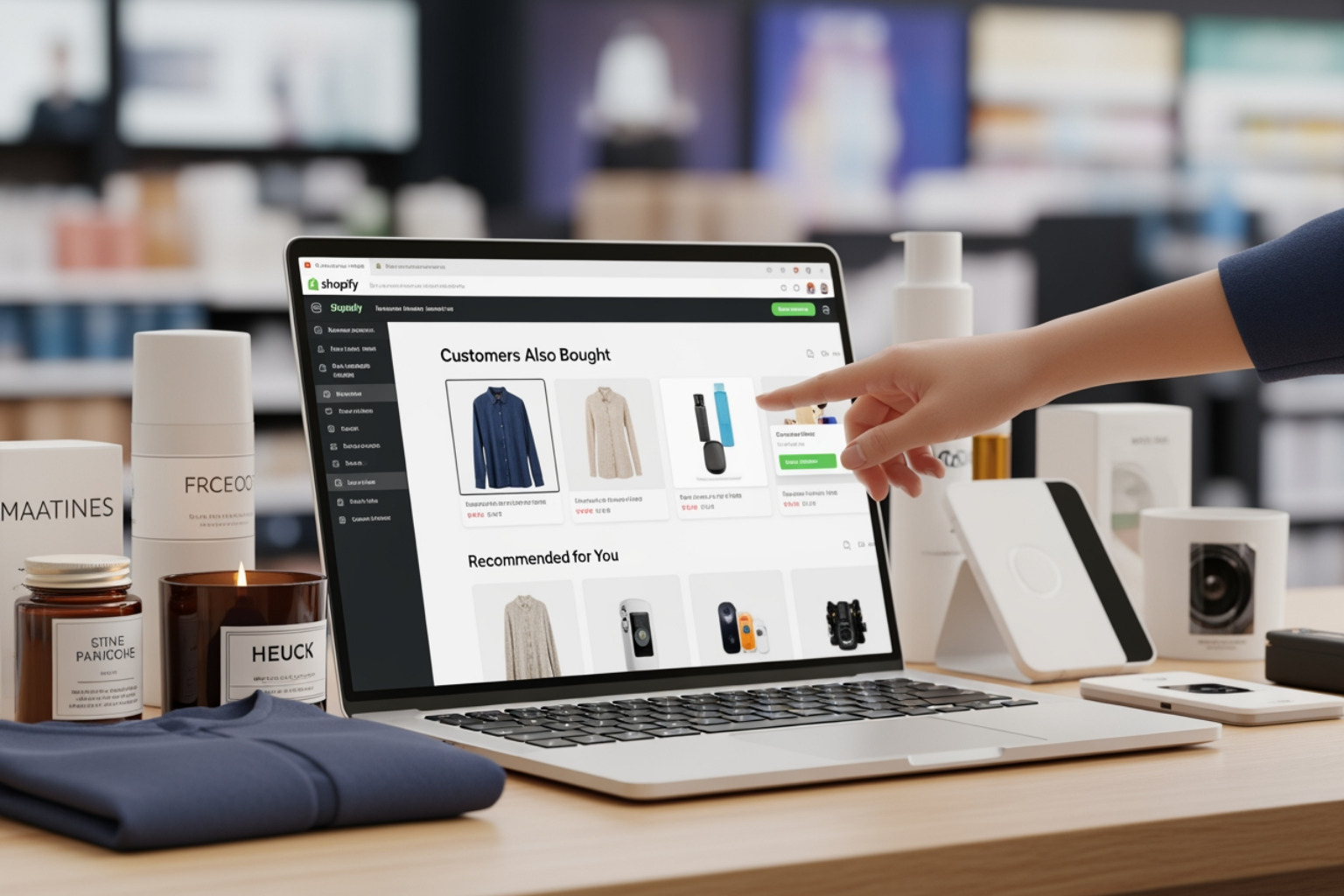
Post-purchase offers convert at a higher rate because of this convenience. They give shoppers the opportunity to add another item to their order without risking the conversion from their initial order. This means your primary sale is secured, and any additional sale is pure bonus. It's an effective way to increase AOV and the total value of every customer.
For more details on making the most of this stage, read my article on Shopify Post Purchase.
3. Product Bundles and Kits
Product bundles and kits are a great way to increase AOV by offering multiple items together, often at a slightly reduced price compared to buying them individually. This strategy works by increasing the perceived value for the customer. They feel like they're getting a deal, and it saves them the work of finding and adding each related item individually.
Common bundle approaches include:
- "Frequently Bought Together": This classic recommendation often seen on product pages suggests items that other customers commonly purchase with the main product.
- Volume Discounts: Offering a discount when a customer buys multiple units of the same item (e.g., "Buy 3, get 10% off").
- "Build Your Own Kit": This highly customizable option lets customers select various components to create a personalized bundle. For example, Glow Recipe’s “Make Your Own Kit” allows shoppers to combine a cleanser, toner, serum, and moisturizer for a discount. This not only increases AOV but also gets customers to interact more with your product catalog.
Bundling is a smart way to move more inventory and introduce customers to products they might not have found otherwise. It's a win-win for both you and your customer. To learn more about this strategy, read my article on Shopify Bundles.
4. "Subscribe & Save" Upsells
For products that are consumable or require regular replenishment, a "subscribe & save" option is an effective upselling Shopify strategy. This converts a one-time purchase into a recurring revenue stream, significantly boosting customer lifetime value.
The appeal for the customer is clear: convenience and savings. By subscribing, they don't have to remember to reorder, and they typically receive a discount or other perks like free shipping. For your store, it means predictable cash flow and a stronger customer relationship.
A great example is Beekman 1802, which offers a discount for subscribing to their serum. Instead of a one-time purchase for $45, customers can save $5 by opting for recurring orders. This simple offer encourages long-term commitment.
Implementing a subscription model turns casual buyers into loyal customers, providing a stable foundation for your Ecommerce Growth Strategy.
Choosing the Right Upselling Shopify App
To get real results from upselling Shopify stores, you will almost always need a dedicated app. Shopify's built-in product recommendations are a useful start, but they do not cover most of what you need for serious upsell plans. The Shopify App Store has many choices, and picking the right one means looking beyond the star rating and reading how the app works with your specific setup.
When I advise clients here at First Pier, I look closely at the app's feature set, how it fits into the existing Shopify tech stack, the pricing model, and whether it has the "Built for Shopify" badge. That badge is Shopify's way of signaling that the app meets their standards for stability, performance, and user experience. You can see many of the better-known tools on the Best Upsell and bundles Apps For 2026 - Shopify App Store page.
For a broader look at tools that support sales growth, see our guide to Best Shopify Apps to Increase Sales.
Key Features to Look For
When you compare upselling Shopify apps, start with a clear view of your store's goals, then check how each app supports them. These are the features we treat as must-haves in client builds:
- Placement Options: The app should allow offers in several spots: product pages, cart, possibly in-checkout (for Shopify Plus), and post-purchase on the thank you page. Flexible placement lets you match offer type to customer intent.
- A/B Testing Capabilities: This is essential if you want to improve results over time. You should be able to test different headlines, product pairings, discounts, and placements to see which combinations perform best.
- Analytics Dashboard: Look for clear reporting on views, accept rates, AOV lift, and total revenue from upsells. You need that data for any serious Shopify CRO Checklist.
- Customization and Branding: Offers should match your store's visual style and tone. You should be able to adjust colors, typography, layout, and copy without custom development.
- Trigger Conditions: Strong apps let you set rules like "show this offer only when Product A is in the cart and the cart total is above $X." That level of control keeps your offers relevant and reduces noise for shoppers.
These features give you the control and data you need to run upsell campaigns that are grounded in customer behavior instead of guesswork.
The Role of AI and Personalization in Upselling Shopify Apps
For modern ecommerce, AI-driven and personalized offers are quickly becoming standard, especially for upselling Shopify. AI-based recommendation engines use browsing history, cart contents, and past orders to pick offers that match what each customer is likely to want.
This matters because about 86% of consumers say personalization affects what they buy, and almost half (around 40%) of US consumers say they have paid more than they planned because the buying experience was custom to them. That means a relevant, well-timed upsell can move a shopper to a higher-value purchase without feeling forced.
AI in current upsell apps can:
- Dynamically Suggest Products: Change offers in real time based on what is in the cart or what the customer has just viewed.
- Adjust Offer Placement: Learn over time which placements and page types lead to the highest acceptance rates for your audience.
- Segment Customers: Group visitors by behavior, order history, or value so you can show different upsells to first-time buyers and loyal repeat customers.
Here at First Pier, we often pair AI-driven suggestions with guided tools like a Shopify Product Recommendation Quiz. Together, they help customers move through your catalog more quickly and find the right add-ons or upgrades without guesswork.
Understanding App Certification and Pricing
When you choose an upselling Shopify app, the "Built for Shopify" badge is one of the clearest signals of quality you can look for. This certification means the app has passed Shopify's review for performance, security, compatibility with the Online Store 2.0 framework, and a clean admin and storefront experience. In day-to-day work, we see that these apps tend to be more stable, get better support, and cause fewer conflicts with other parts of the stack.
Pricing models vary, and it is worth doing the math before you install anything on a live store:
- Flat Fee: A fixed monthly price regardless of usage. This is predictable and often suits brands with steady or higher volume.
- Usage-Based: Costs that change based on views, accepted offers, or order volume. This can work well for smaller stores that are still ramping up.
- Percentage of Revenue: A share of upsell revenue paid to the app provider. This aligns pricing with performance but can be harder to forecast and may become expensive for high-volume brands.
We recommend reading the fine print for each plan and watching for features that are locked behind higher tiers, such as A/B testing or post-purchase offers. Many apps offer a free trial or a limited free tier, which can be useful for testing the app's function before you commit to a paid plan.
Best Practices for Creating Effective Upsell Offers
Creating an effective upsell is about being helpful and specific, not aggressive. The best offers line up with what the customer is already trying to do and make the purchase feel more complete.
These principles guide my approach to Shopify Conversion Rate Optimization.
Keep Offers Relevant and Value-Driven
The main rule of upselling, and one we stress here at First Pier, is to provide clear value. An upsell should improve how the customer uses the product or solve a related problem. If it feels like a pure cash grab, customers will ignore it or, worse, abandon the process.
A practical guideline is the "25% rule": avoid suggesting products that raise the order total by more than about 25%. If a customer is buying a $100 item, an upsell for a $10 or $20 addition is more likely to be accepted than a $150 upgrade. Staying within that range keeps the offer within the customer's comfort zone and reduces decision friction.
Focus the upsell copy on what the customer gains. For example, does the offer:
- Save money over time (such as a larger size of a product they will reorder)?
- Add something they will likely need anyway (such as a charger, filter, or refill)?
- Improve how they use the main product (such as a premium version or a better fit)?
- Reduce risk (such as an extended warranty or protection plan)?
Social proof helps here as well. If a high share of other customers buy a certain item with the main product, say so in plain terms. Limited-time pricing can work too, but only if it is honest and used sparingly. If every step of the funnel is full of countdown timers, customers tune out. Aim for a small number of tightly targeted offers instead of a lot of generic pop-ups.
Measure, Test, and Refine Your Strategy
Upselling should be treated as an ongoing program, not a one-time project. To make it work for your Shopify store, you need a basic measurement plan and regular testing.
Start with a few core metrics:
- Average Order Value (AOV): Your primary benchmark for upsell performance.
- Offer Conversion Rate: The share of visitors who accept a given upsell after seeing it.
- Total Upsell Revenue: How much revenue can be traced back directly to upsell offers.
Once you have a baseline, begin testing. At First Pier, we use A/B tests for:
- Different headlines or benefit statements.
- Alternative product pairings for the same main item.
- Discount vs. no-discount offers.
- Placement changes (product page vs. cart vs. post-purchase).
Review the results by device type, traffic source, and whether the buyer is new or returning. Often, an offer that works well for repeat customers performs poorly for first-time visitors, or desktop and mobile respond differently to the same layout.
Use this data to keep a small set of high-performing upsells live and retire those that do not move the numbers. This feedback loop is a key part of Ecommerce Sales Funnel Optimization and is how you turn upselling from a one-off tactic into a reliable revenue channel.
Frequently Asked Questions about Shopify Upselling
When is the best time to show an upsell offer?
The timing depends on what kind of offer you are making.
- Pre-purchase offers on product or cart pages work well for direct upgrades or must-have add-ons that feel like part of the core purchase.
- Post-purchase offers on the thank you page are better suited to impulse buys or nice-to-have extras. Because the main order is already placed, these offers do not put that first conversion at risk.
Can upselling hurt my store's conversion rate?
It can if it is done in a way that interrupts or confuses the buyer. Overlapping pop-ups, irrelevant suggestions, or too many prompts can slow people down and lead to abandonment. The goal is to support the buying decision, not distract from it.
Post-purchase upsells are a useful way to avoid this problem. Since they appear after checkout, they cannot hurt your core conversion rate. Whichever placement you choose, steady A/B testing will help you see which offers support your funnel and which ones need to be adjusted or removed.
Do I need an app to upsell on Shopify?
Most themes offer a basic related products block, but for serious upselling Shopify work, a dedicated app is usually needed. Upsell apps give you:
- One-click post-purchase offers.
- Multi-step upsell and cross-sell flows.
- A/B testing to refine offers over time.
- Visual and copy control so offers match your brand.
- AI-based personalization to keep suggestions relevant.
Without an app, you are limited to fairly simple setups and will miss many of the easier opportunities to raise AOV.
Final Takeaways
Upselling Shopify strategies are not just about making more money; they're about building stronger customer relationships by delivering more value. By understanding the difference between upselling and cross-selling, and by implementing strategies like pre-purchase offers, post-purchase one-click upsells, product bundles, and "subscribe & save" options, you can significantly increase your Average Order Value and customer loyalty.
Choosing the right app with key features like A/B testing, personalization, and "Built for Shopify" certification is fundamental. Remember to always keep your offers relevant, value-driven, and to continuously measure and refine your approach.
Here at First Pier, we help brands build effective sales strategies directly into their Shopify stores, ensuring they're not just selling products, but building long-term customer loyalty. If you're looking to refine your approach, I invite you to learn how we can help you Get expert help with your Shopify CRO strategy and see your store grow.





.png)
.png)

